The worst thing about going abroad during baseball season is missing baseball. So when I had to go to Sweden on business, I had resigned myself to a break from baseball. The weather in Stockholm was crap anyway. But I did a little search for the hell of it and found that there’s an active Baseball and Softball Association, and that there was a “match†scheduled for Saturday in the top division, the Elitserien. Well, the rain was coming down pretty good Saturday morning, so I figured it would be rained out for sure. Then I checked the web site, and the game was on, as evidenced by live scoring. So I ran to the subway and took the number 17 to Skarpnäck, a suburb south of town. There’s a big public sport park (idrottsplats) with football fields, tennis courts, a baseball field, and a softball field.
I got there during the fourth inning with Stockholm leading 1-0. They were playing Sölvesborg from Blekinge in the south of Sweden. The rain had recently stopped, and the field was in quite good shape. It was a nicely manicured field with an outfield fence (didn’t notice any distances) and a chain-link backstop. They even had lights, but the guy said they weren’t very powerful. The dugouts were rather improvised, but there was a nice set of bleachers behind home plate, as well as a little press box where the guys were scoing the game on the internet. I asked them for a roster, but they didn’t have any spare copies. They had a speaker set up in the bleachers, which they used to announce the batters and even play walk-up music for the home team. (Unlike in Binghamton, the volume was tolerable.) Of course, they played TMOTTBG during the seventh-inning stretch. Not surprisingly, no one was singing. It is Sweden, after all.
There were about a dozen folks in the stands for the whole game, and a few others wandered by to watch from time to time. I talked to one guy who was wearing a Stockholm team jacket and cap. He told me about the Stockholm club, which has quite a few teams: seniors, juniors, cadets, and a few more kids’ teams. Saturday was a double header for the senior team, and they had some of the kids’ games scheduled for Sunday. All the Stockholm players are native Swedes, but the manager is an American guy named Trevor Rooper. (Nope, he’s not in baseball-reference!) Most of the guys looked like they were in their teens and 20s, but there were a few older guys too. There was a girls softball game going on next to the baseball field, but their game was over by the time I wandered over for a closer look.
I talked to a group of folks watching their first game. They live in the area and walk by the sports fields all the time, but this was their first time checking it out up close. I had to explain a sac fly and an intentional walk. They asked me to let them know when they should root on their team!
The level of play was probably a bit below high-school level. There was not much solid contact. Saw lots of weak ground balls and strikeouts. The pitching was much better, however, at least in terms of control. I think I saw only two walks. It looked like mostly BP-type fastballs, but I did see Stockholm’s pitcher throw a couple of off-speed pitches. Fielding was hit-and-miss. I really noticed it during the throws. Not much zip at all. I think even I could have stolen second off the catchers!
The equipment looked top-notch. No names on the back, but a few of the Stockholm guys had a URL (www.frozenrope.se), which was a baseball supply store that looks to have gone under since. I was surprised that they used wooden bats. Not many balls were fouled out of play (lack of contact), and they did not spark frenzied scrambles as in the States. One of the kids would just retrieve it and give it back. Two umps worked the game. Everything I heard them call was in English.
The final was 2-0 Stockholm, which was an unusually low-scoring game. [BOX SCORE] I had to leave after the first game, but Stockholm took the second game 20-5. Mercy rule. Stockholm is the best team in the country. They’ve won something like four of the last five national club championships.
So, who knows, maybe baseball in Sweden is where golf was 30 years ago. They’ve got a long way to go before they can think about the World Baseball Classic, but you never know.




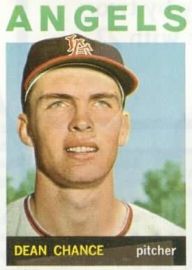
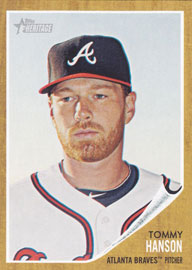

 Although
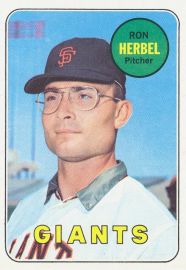
 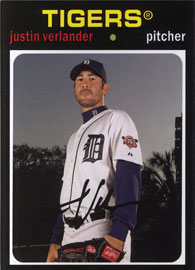 And, finally, of the pitchers with the dubious distinction of never having reached base safely ever, the guy with the most plate appearances (33) is none other than